

How to Inspect Commodity Products from China Before Shipment

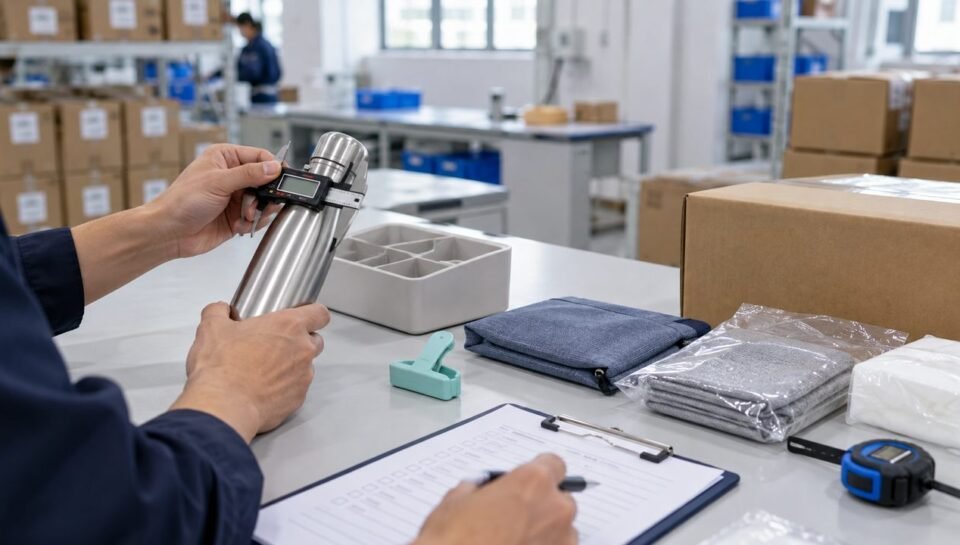
Commodity products often look simple: storage boxes, drinkware, textile pouches, kitchen tools, stationery, phone accessories and other everyday goods. Their inspection is rarely simple. One purchase order may contain several colors, sizes, materials, printed designs and packing configurations, sometimes from more than one workshop. A defect that costs only a few cents at the factory can become an expensive sorting, relabeling or return problem after the goods arrive.
A useful pre-shipment inspection checks the finished order against a written specification before the balance payment and shipping release. It does not rely on a quick look at the first cartons the supplier opens. The inspector needs a defined lot, a random sample, approved references, measurable requirements and a rule for deciding whether the shipment passes, fails or needs corrective action.
Define the inspection lot before choosing samples
Start with the actual quantity available for inspection. Ask the supplier for a packing list by SKU, color, size and carton, then confirm how much of the order is finished and packed. If 10,000 pieces were ordered but only 6,000 are complete, the inspection cannot represent the full order. Record the production completion percentage and identify any goods that remain outside the inspected lot.
Mixed orders need deliberate sample allocation. A random sample drawn from the total quantity can miss a small but important SKU. Set a minimum number for each style or variant and spread the selections across master cartons, inner boxes, production dates and pallet positions. The factory should not preselect samples. Inspectors should choose cartons from the warehouse and record the carton numbers they opened.
| Lot question | What to confirm before inspection |
|---|---|
| Is production complete? | Finished and packed quantity versus the purchase order, with unfinished goods listed separately |
| How many SKUs are included? | Quantity, color, size, artwork and packing method for every variant |
| Where are the goods stored? | All warehouse locations, pallets and overflow areas included in the lot |
| Can cartons be selected at random? | Inspector has access to sealed cartons without supplier preselection |
| What has already shipped? | Any partial shipment is excluded from the inspected lot and reported to the buyer |
Build the checklist from approved product data
A generic checklist can find obvious damage, but it cannot tell an inspector what the buyer approved. Prepare an inspection file before mass production. It should include the purchase order, product specification, approved sample photographs, artwork, barcode list, packaging drawings, labeling requirements, tolerance limits and any safety or performance tests that can be completed at the factory.
Convert descriptions such as “good quality” or “strong material” into observable criteria. State the plastic resin if it matters, the fabric weight, finished dimensions, color reference, logo position, print method, load requirement, closure cycle, volume, net weight and acceptable cosmetic limits. If a requirement cannot be measured or compared, different people will interpret it differently.
- Use one controlled specification revision and write its date or version on the checklist.
- Mark which sample is the golden sample and whether it was approved for construction, color, artwork or all three.
- List tolerances beside each dimension instead of asking the inspector to judge whether a difference is small.
- Attach the final barcode, warning, country-of-origin and carton-mark files supplied to the factory.
- Separate laboratory or certification requirements from checks that can be performed during the factory visit.
Use an AQL plan with clear defect classes
Many importers use acceptance sampling rather than checking every unit. The current ISO 2859-1:2026 provides sampling schemes indexed by acceptance quality limit for lot-by-lot inspection. The chosen lot size, inspection level and AQL values lead to a sample size and acceptance or rejection numbers. The plan should be agreed before the inspection, not adjusted after defects are found.
AQL is a decision rule for the sampled lot. It does not promise that every uninspected unit is defect-free, and it is not a percentage of defects that the factory may knowingly ship. Buyers often begin with General Inspection Level II and separate AQL values for critical, major and minor defects, but the correct plan depends on product risk, supplier history, order value and the cost of a failure. Safety-sensitive goods may need tighter sampling, special tests or full inspection of specific features.
Classify defects by customer and safety impact
| Defect class | Practical meaning | Commodity product examples |
|---|---|---|
| Critical | Could create a safety or legal risk | Sharp exposed edge, hazardous contamination, missing mandatory warning, unsafe electrical construction |
| Major | Likely to cause rejection, failure or unusable product | Wrong size, broken closure, unreadable barcode, leaking bottle, incorrect logo, missing component |
| Minor | Noticeable but does not normally prevent intended use | Small cosmetic mark, slight print shift within an agreed limit, loose thread away from a seam |
Write a defect catalogue with photographs when appearance matters. A vague line such as “scratches are not acceptable” can turn a cosmetic discussion into an argument. Define the surface, viewing distance, lighting, maximum size, permitted count and whether the rule differs between display surfaces and hidden areas.
Run identity, workmanship and measurement checks
Begin by confirming that the sampled goods are the product ordered. Compare model, material, color, finish, dimensions, weight, accessories and construction with the specification and approved sample. Measure enough units to see variation across the lot. A single correct result can hide mold, cutting or assembly drift elsewhere in production.
- Plastic goods: check resin or material evidence, odor, color consistency, molding marks, flash, sink marks, warping, cracks and fit between parts.
- Textile goods: check fabric, finished dimensions, stitching density, seam strength, loose threads, stains, color variation, zipper or closure function and label position.
- Metal goods: check dimensions, burrs, sharp edges, plating or paint coverage, corrosion, dents, welds, fasteners and moving parts.
- Printed or promotional goods: compare logo size, color, position, orientation, registration, adhesion and resistance to normal rubbing.
- Sets and kits: verify the component count, variant combination, instructions, spare parts and assembly hardware in each retail pack.
Photograph measuring tools in use and show the reading in the report. Calipers, scales, tape measures, coating gauges or simple jigs should be suitable for the tolerance. If an important dimension is close to the limit, take repeat measurements and record the instrument rather than rounding the result.
Test the product in the way a buyer will use it
Functional checks should reproduce normal handling and predictable misuse without turning the visit into an improvised laboratory. Open and close lids, operate zippers and buttons, assemble parts, apply the specified load, fill containers, check for leakage, fit accessories and compare mating components. Use a stated method, duration and pass criterion. “Function OK” gives the buyer little evidence if a dispute follows.
Some tests can be performed on the full AQL sample, while destructive or time-consuming checks use a smaller special sample. Agree that quantity in advance. Record which units were damaged by testing and whether the supplier replaced them. Tests involving food contact, restricted substances, flammability, electrical safety or regulated performance usually need qualified laboratory work. A factory inspection can verify documents and production identity, but it should not be presented as a substitute for required conformity assessment.
Check packaging as part of the product
Commodity orders often fail at packing even when the item itself is acceptable. Thin polybags split, inner boxes crush, labels are applied to the wrong color, barcodes do not scan, or the master carton cannot survive normal handling. Inspect retail packaging and export cartons against the approved packing specification.
- Count pieces per inner pack and master carton, including assortments by color or size.
- Scan a spread of barcodes and compare the encoded number with the SKU list and printed digits.
- Check product protection, bag thickness where specified, sealing, inserts, moisture control and scratch prevention.
- Confirm carton dimensions, gross and net weight, board or strength requirement, strapping and pallet pattern where applicable.
- Compare shipping marks, purchase-order number, carton sequence, country of origin and handling symbols with approved artwork.
- Perform an agreed carton drop test on representative packed cartons when the product and route justify it, then inspect both carton and contents.
Carton quantity and dimensions also affect freight cost. If the factory changes pack-out from 24 to 20 pieces or uses a larger carton, the final cubic volume can move enough to change the shipping quote. Record actual carton measurements and weights so the buyer or freight forwarder can check the booking data.
Verify quantity, labels and compliance evidence
A pre-shipment report should reconcile the inspected quantity with the purchase order and packing list. Count full cartons and verify piece counts in opened cartons. For mixed cartons, check the assortment carefully. Record shortages, overproduction and any quantity the supplier says will be completed after the visit.
Labels need the same SKU-level control. Check model, color, size, material or fiber information, importer or responsible-party details, warnings, language, country of origin and traceability codes required for the destination. Requirements vary by product and market. For US consumer products within its jurisdiction, the US Consumer Product Safety Commission explains that importers have reporting duties when they obtain information about certain defects, substantial risks or noncompliance. Importers should identify applicable rules before production and use inspection to confirm the approved implementation.
Turn the report into a shipment decision
The inspection result should show the lot, sample, defect counts, tests, measurements, photographs and any limitation. A pass result means the sampled lot met the agreed sampling and test criteria. It does not transfer the importer’s legal responsibility, guarantee every unit or approve product changes that were outside the checklist.
- Review critical defects first. A single safety issue may require an immediate hold, wider investigation and specialist advice.
- Compare major and minor defect totals with the pre-agreed acceptance and rejection numbers.
- Separate isolated workmanship defects from repeated or systematic problems that may affect units outside the sample.
- Ask for a root-cause explanation, corrective action and evidence of rework when the lot fails.
- Require reinspection of the corrected lot when the risk or defect pattern justifies it. Do not rely only on factory photographs for broad rework.
- Release the balance payment and shipment only through the buyer’s agreed approval process after documents and inspection findings are resolved.
If the supplier disputes a defect, return to the approved specification, sample and classification rule. New concessions should be written and limited to the affected order. Quietly changing the checklist after inspection makes it harder to control the next production run.
Combine inspection with supplier and warehouse control
Inspection is strongest when it is part of the order process. Approve samples before mass production, keep specifications under version control, monitor material or sub-supplier changes, and schedule the visit when the goods are complete but still recoverable. For orders assembled from several suppliers, use a China warehouse to receive, count and inspect goods before consolidation when factory-level checks are impractical.
Our China commodity products sourcing guide covers supplier selection, RFQ comparison and order setup. The pre-shipment inspection guide explains how inspection connects with balance-payment control. If several small orders need one shipment, see our guide to China warehouse and logistics support.
How Direct Sourcing China supports commodity orders
Direct Sourcing China can coordinate specifications, approved samples, supplier follow-up, independent inspection instructions, defect communication, rework checks and warehouse consolidation. The goal is to give the buyer a traceable basis for the shipment decision while there is still time to correct a problem in China.
To prepare an inspection, send us the product list, quantities, destination markets, approved samples and current packing requirements. We can help turn those files into a practical SKU-level checklist and coordinate the inspection with your payment and shipping timeline.
Frequently asked questions
Schedule it when production is complete and most or all goods are packed, but before the balance payment and shipping release. Confirm the actual completion percentage so the report does not appear to cover unfinished goods.
There is no single value for every order. Set the inspection level, critical, major and minor defect limits according to product risk, supplier history and buyer requirements before the visit. Safety-sensitive features may need tighter or 100 percent checks.
Yes, if the sampling allocation is planned by SKU. Give small variants a minimum sample and spread selections across cartons, colors, sizes and packing dates instead of drawing only from the largest SKU.
No. Acceptance sampling supports a lot decision from a random sample. It reduces risk but does not prove that every uninspected unit is defect-free or replace the importer’s compliance responsibilities.
Hold shipment approval, review the defect pattern, require root-cause and corrective-action evidence, and decide whether sorting, rework, replacement or rejection is appropriate. Reinspect the corrected lot when the risk justifies it.