




Pre-Shipment Inspection in China: What Importers Should Check Before Paying Balance

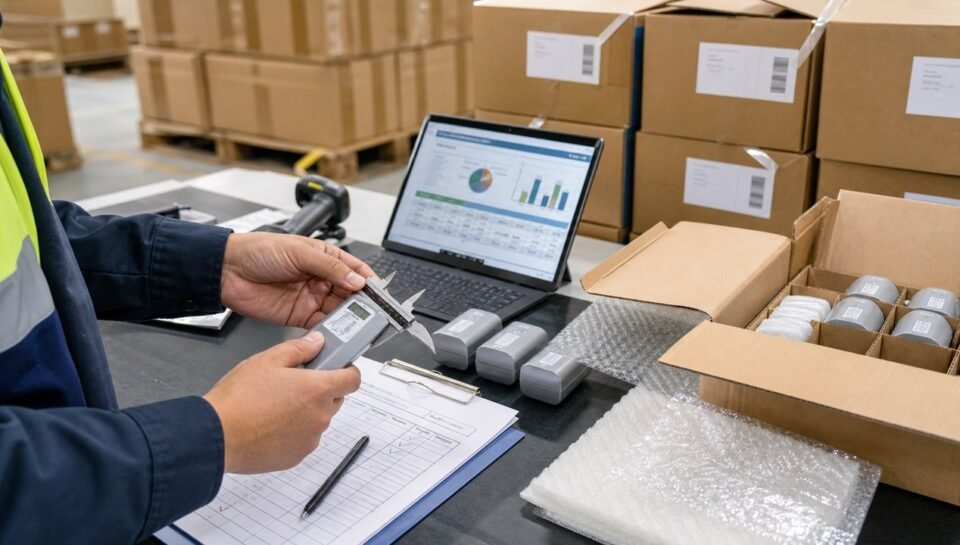
The last payment is the buyer’s strongest leverage in a China sourcing order. Once the balance is paid, it becomes much harder to push a supplier to rework defects, correct packaging, replace missing accessories or delay shipment until problems are fixed.
That is why pre-shipment inspection should happen before the balance payment, not after the goods are already on the water. A good inspection does not make sourcing risk disappear. It gives the importer a clear picture of what is actually packed, what failed, and whether the supplier still needs to fix anything.
This article is written for importers buying from China across products such as Bluetooth speakers, earbuds, car audio, custom metal parts, Yangjiang knives and scissors, wireless chargers and other manufactured goods. If you are still choosing a supplier, read this first: How to Avoid Supplier Scams When Sourcing Products from China.
1. Confirm the order is ready for inspection
A pre-shipment inspection is useful only when the order is actually ready. If the factory has made 40% of the goods and promises the rest will be finished tomorrow, the inspection is too early. You may see a clean sample table while unfinished goods are still being repaired elsewhere.
Before sending an inspector, ask the supplier to confirm the finished quantity, packed quantity, carton count, storage location and expected loading date. For most orders, inspection should happen when all goods are finished and most or all goods are packed. The buyer still needs enough time for rework before the planned shipment.
- Finished quantity and packed quantity
- Carton count and warehouse location
- Final packing list and purchase order number
- Approved sample or golden sample available on site
- Time left for rework before loading
2. Check quantity before checking small defects
Quantity sounds basic, but it is one of the first things an inspector should confirm. Count cartons. Check carton markings. Compare the packing list with the purchase order. Open selected cartons and count inner boxes or units. If the shipment is short, the buyer needs to know before paying the balance.
For mixed SKU orders, quantity control is more important. A supplier may have the correct total carton count but the wrong color split, plug type, model version, language manual or packaging version. That mistake can create trouble when the shipment reaches a distributor warehouse or Amazon-style receiving process.
3. Compare production against the approved sample
The approved sample is not a souvenir. It is the reference point for mass production. During inspection, the goods should be compared with the approved sample, final specification sheet, artwork proof and purchase order.
For electronics, this may include color, housing texture, button feel, screen printing, accessories, cable type, battery label, user manual and basic function. For metal parts, it may include dimensions, surface finish, burrs, thread quality, coating thickness and packing protection. For knives or scissors, it may include blade finish, sharpness feel, handle fit, logo position and safety packaging.
When the factory says a change is “almost the same,” ask whether the buyer approved it in writing. If not, treat it as a change, not an accident.
4. Use a clear defect standard
Inspection becomes messy when nobody defines what counts as a defect. A tiny scratch on the bottom of a metal bracket may be acceptable. A scratch on the front face of a retail speaker may not be. A slightly crushed export carton might be fine for sea freight; a crushed gift box can fail a retail order.
A simple defect standard should separate critical, major and minor defects. Critical defects are safety, legal or severe function problems. Major defects affect use, appearance, saleability or order requirements. Minor defects are small issues that do not stop the product from being used or sold, within agreed limits.
- Critical: unsafe wiring, sharp dangerous burrs, wrong voltage, missing required warning, battery swelling.
- Major: wrong model, function failure, broken part, wrong logo, serious scratch, missing accessory.
- Minor: small cosmetic mark, light carton scuff, slight color variation within the approved range.
5. Decide the sampling plan before the inspector arrives
Many importers use AQL-style sampling for pre-shipment inspection. The exact sampling level and acceptance limit depend on the product, order value and risk. The important point is to agree before inspection starts. If the buyer changes the pass/fail rule after seeing the result, the argument becomes harder.
For higher-risk products, sampling alone may not be enough. You can add special checks: 100% barcode scan, 100% power-on check, extra battery runtime test, waterproof spot test, thread gauge check, drop test for packaging, or full count of a critical accessory.
Be practical. Inspecting every detail on every unit may cost more than the order can support. But checking too little is also false economy.
6. Test function in a way that matches real use
Function checks should match the product. For Bluetooth speakers, pair with a phone, play audio, test buttons, charge the unit, check accessories and look for rattling or unstable connections. For wireless chargers, check charging start, cable fit, heat behavior and packaging labels. For custom metal parts, measure key dimensions and test assembly fit if fixtures are available.
The inspector does not replace a laboratory. Still, a practical on-site test can catch many production mistakes. If the supplier packed the wrong cable, changed a component or skipped an aging process, a basic functional check may reveal it before the goods leave China.
For an audio-specific example, see our Bluetooth Speaker Quality Inspection Checklist for Importers.
7. Packaging and labels deserve real attention
Many shipments fail at the packaging level, not the product level. Wrong barcode, missing warning label, weak inner tray, thin export carton, wrong carton mark, poor bubble protection or mixed SKU packing can create problems after arrival.
Check the retail box, inner packing, master carton, carton weight, carton dimensions, shipping marks, SKU labels, country of origin marking, user manual, warranty card and any required compliance label. If the buyer has warehouse requirements, the inspection checklist should include them.
For e-commerce or distributor shipments, carton labels are not small details. A wrong barcode or mixed SKU carton can cost more than the inspection fee.
8. Review documents before releasing the balance
Pre-shipment inspection should be tied to documents. At minimum, compare the purchase order, proforma invoice, packing list, product specification, approved artwork and any required test documents. If the order needs CE, FCC, RoHS, battery documents or material declarations, confirm the supplier has provided the correct version before the balance is paid.
For electronics compliance basics, this guide may help: CE, FCC and RoHS for Electronics Imported from China.
9. What to do when inspection fails
A failed inspection is not the end of the order. It is a decision point. Ask for clear photos, defect quantities, affected cartons, possible root cause and the factory’s rework plan. Then decide whether the issue needs sorting, repair, replacement, discount, re-inspection or shipment hold.
Do not release the balance just because the supplier says the defects are “normal.” If the issue affects saleability, safety, function, packaging or customer acceptance, get it fixed while the goods are still in China. Once the shipment arrives overseas, every small fix becomes slower and more expensive.
10. How Direct Sourcing China handles pre-shipment inspection
Direct Sourcing China helps importers inspect goods before balance payment, with a checklist built around the product and the buyer’s order requirements. We check quantity, appearance, function, packaging, labels, accessories, documents and shipment readiness. For higher-risk orders, we can add product-specific checks for audio, electronics, metal parts, knives, scissors or custom products.
If you are sourcing from China and want local support before paying the balance, review our Pre-Shipment Quality Inspection service or contact us with your purchase order and product specification.
FAQ
It is usually done when production is finished and at least 80% to 100% of the goods are packed. The timing should still allow the supplier to rework problems before shipment and before balance payment.
For most first-time or higher-risk orders, no. Inspect before paying the balance so the supplier still has a reason to fix defects, replace goods, correct labels or repack cartons.
It normally checks quantity, workmanship, dimensions, function, accessories, labels, packaging, carton marks, safety warnings, barcode or SKU details, and consistency with the approved sample and purchase order.
No. Most inspections use sampling, so they reduce risk rather than inspect every unit. For critical products, buyers can add special tests, higher sampling, or 100% checks for selected points.
The buyer should ask for a defect list, photos, rework plan and re-inspection if needed. The balance payment should not be released until major issues are corrected or a written agreement is reached.






3 Comments
How to Source Custom Tote Bags from China: Materials, Logo Printing and QC Guide - Professional in Auido Products | Best China Sourcing Agent of Best
September 5, 2026[…] For the balance-payment stage, this Direct Sourcing China guide is useful: Pre-Shipment Inspection in China: What Importers Should Check Before Paying Balance. […]
How to Source Custom Handheld Fans from China: Battery, Logo Printing and QC Guide - Professional in Auido Products | Best China Sourcing Agent of Best
September 8, 2026[…] the general balance-payment process, see Pre-Shipment Inspection in China. Rechargeable fan orders should not be paid in full before the goods and documents are […]
China Sourcing Agent Fees: Commission, Fixed Fees and What Importers Should Expect - Professional in Auido Products | Best China Sourcing Agent of Best
September 27, 2026[…] quality control is priced separately, review our pre-shipment inspection guide. It explains why the inspection scope, sample selection, defect limits and balance-payment decision […]