
How to Avoid Supplier Scams When Sourcing Products from China

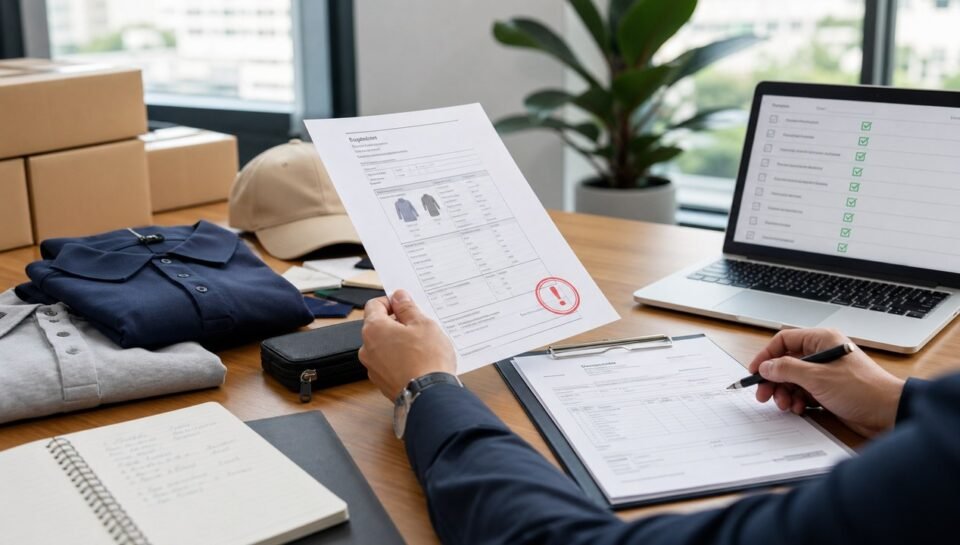
Most China sourcing problems are not movie-style scams. They are quieter than that. A supplier uses a trading company name that does not match the factory. A certificate belongs to another model. A bank account changes just before payment. A sample looks fine, then bulk production uses cheaper parts.
That is why scam prevention should start before the deposit. Importers need a simple routine for checking identity, documents, samples, payment details and shipment control. It does not remove every risk, but it catches many problems while the buyer still has leverage.
If you are new to supplier screening, also read our related guide: How to Verify a Chinese Supplier Before Paying a Deposit. This article goes deeper into the scam patterns that show up during actual sourcing work.
1. Start with the real company name
The English name on a website or Alibaba profile is often only a sales name. The real identity is the Chinese legal company name on the business license. Ask for the business license, then compare the Chinese name with the proforma invoice, bank account beneficiary, export documents and any certification files.
Small mismatches are common in cross-border trade, but unexplained mismatches should slow the order down. If the supplier says the bank account belongs to a sister company, payment agent, boss’s other company or finance partner, ask for a clear written explanation and proof of the relationship. Do not treat it as a small admin issue.
- Business license Chinese name and unified social credit code
- Registered address and actual operating address
- Bank account beneficiary name
- Invoice or proforma invoice company name
- Certificate holder and product model number
2. Be careful with fake factory claims
Many suppliers call themselves factories. Some are real manufacturers. Some are trading companies with good supplier networks. Others are sales offices that know very little about production. A trading company is not automatically bad, but a supplier that hides its role is a risk.
Ask practical factory questions. Which process is done in-house? What is outsourced? Can they show production lines, testing equipment, packing area and warehouse? Can they provide a short video with today’s date or your company name on a paper card? For important orders, a local visit is still the cleanest check.
The point is not to punish every middleman. The point is to know who controls quality, who can rework defective goods and who will answer when production is late.
3. Low price is a risk signal, not a win by itself
A very low quote can be real for a clearance item or standard product. More often, the cheap quote is cheap because something is missing. The cable is not included. The packaging is weaker. The material grade changed. The battery capacity is lower. The inspection standard is not included. The supplier quoted a similar item, not your exact specification.
When one price is far below the others, ask the supplier to confirm the specification line by line. Material, dimensions, components, packaging, logo method, certificates, carton quantity, lead time and payment terms should all be written down. If the supplier avoids written confirmation, the price is not useful.
4. Watch for payment and bank account tricks
Payment fraud often happens near the moment of urgency: the sample is approved, production slot is available, or shipment is waiting. The supplier asks for quick payment, then a new account appears. Sometimes the email account was compromised. Sometimes the supplier is pushing money through an unrelated account.
The U.S. Federal Trade Commission warns buyers to be careful with wire transfers because they are hard to reverse once sent. In sourcing, the same habit applies: verify payment instructions through a second channel before sending money. If an account changes, call the known contact or use a previously confirmed messaging channel. Do not rely only on one email thread. FTC wire transfer guidance is available on its official page.
- The beneficiary name should match the supplier or a clearly documented related company.
- Bank account changes should be verified outside the email thread.
- A personal account for a production deposit is usually a serious warning sign.
- Payment terms should be written in the proforma invoice before transfer.
5. Check certificates instead of collecting PDFs
Many buyers ask for CE, FCC, RoHS, test reports or battery documents, then stop when the supplier sends a PDF. That is not enough. A document can be old, edited, issued for another factory, or issued for a similar product that does not match your order.
Check the certificate holder, product name, model number, test standard, issue date and lab name. For electronics, compare the report photos and model numbers with your sample. If you are importing audio products, wireless chargers, earbuds, car electronics or products with batteries, document checking should happen before the deposit, not after the goods are finished.
For electronics compliance basics, see our guide: CE, FCC and RoHS for Electronics Imported from China.
6. Do not let the sample become a trap
A good sample does not guarantee good bulk production. Sometimes a supplier sends a sample made by another factory. Sometimes the sample uses better components than mass production. Sometimes the supplier can make one good piece by hand but cannot control a full order.
Keep a golden sample. Photograph it. Record the specification. Write the inspection points before production starts. For products such as Bluetooth speakers, earbuds, car audio, wireless chargers, metal parts or knives and scissors, the sample should not be judged only by appearance. It should be checked for function, material, packaging, labels and any market-specific requirements.
7. Use written specifications, not chat promises
Chat messages are useful for discussion, but they are weak as order control. Before paying a production deposit, turn the important points into a proforma invoice, purchase order or specification sheet. This includes product model, material, color, logo, packaging, inspection standard, certificates, lead time, shipment terms and balance payment condition.
The balance payment condition matters. If the buyer pays the balance before inspection, the supplier has less pressure to rework problems. A better habit is to inspect before balance payment, then release payment after major issues are solved.
For inspection timing, this article may help: Bluetooth Speaker Quality Inspection Checklist for Importers. The same thinking works for many custom and electronic products.
8. Common red flags importers should not ignore
- The supplier refuses to provide a Chinese business license or gives a blurry copy.
- The bank account beneficiary does not match the supplier and the explanation is vague.
- The quote is much lower than other suppliers but the specification is not clear.
- The supplier pushes for full payment before production or before inspection.
- The certificate model number does not match the product being ordered.
- The sample quality is good, but the supplier avoids writing the same standard into the order.
- The supplier claims every certification is available but cannot provide full reports.
- The contact becomes impatient when you ask normal verification questions.
One red flag does not always mean fraud. Several red flags together usually mean the buyer should pause.
9. How Direct Sourcing China reduces supplier risk
Direct Sourcing China helps importers with supplier screening, purchasing support, factory communication, sample review, compliance document checking and pre-shipment inspection. For higher-risk products, local checking is often cheaper than fixing the problem after the shipment arrives.
Our work is most useful when the product has custom parts, electronics, batteries, strict appearance standards or market compliance requirements. That includes audio products, Bluetooth speakers, earbuds, car audio, wireless chargers, custom metal parts and Yangjiang knives and scissors. You can review our services or contact us before sending a deposit to a new supplier.
FAQ
Check the business license, Chinese company name, registered address, bank account name, product scope, factory photos, certificates and sample consistency. For larger orders, use a local factory visit or supplier verification before paying a deposit.
No, but it is a warning sign. The supplier may be using cheaper materials, excluding packaging or testing costs, quoting a different specification, or planning to change terms after the deposit.
For a small sample fee, it may be acceptable. For a production deposit, verify the supplier, confirm the company name and bank account, approve a written specification, and keep all payment terms in the proforma invoice.
Yes. Ask for the full report, certificate holder, model number, issuing lab and test standard. Check whether the document covers your exact product and market, not a similar model from another factory.
It helps, but it should not be the only control. Inspection is strongest when the order already has a clear specification, approved sample, packaging standard and written defect criteria.