

How to Find Private Label Manufacturers in China: MOQ, Samples and Custom Packaging

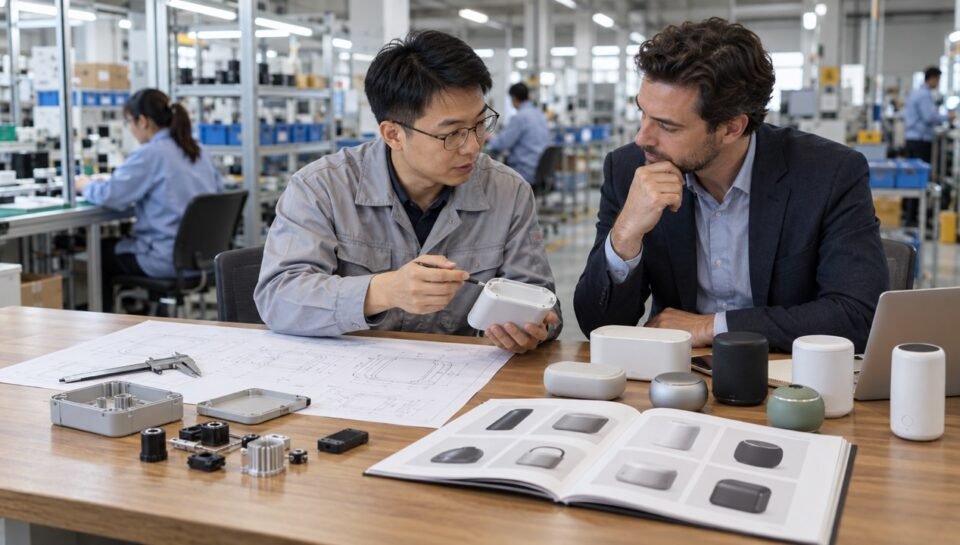
Finding private label manufacturers in China involves more than finding a supplier willing to print your logo. You need a product that fits your market, a factory that can repeat the approved specification and a packaging process that protects the goods and represents your brand correctly.
Start by defining what you want to change. An existing product with a logo and retail box needs a different supplier brief from a product with a new material, component or enclosure. That distinction affects the minimum order quantity, sample work, tooling and the evidence you need before committing to production.
This guide focuses on selecting and managing the manufacturer for a private-label order. It covers supplier search, capability checks, MOQ, decorated samples and custom packaging, with practical steps for importers launching or expanding a branded product line.
Define the private-label product before searching for factories
Write a short product brief with reference images, intended use, target customer, destination market and quantity by SKU. Specify the materials, dimensions, functions and finish that matter. Add your logo requirements, packaging format, target cost range and the date goods must reach the agreed delivery point.
Separate essential requirements from preferences. A stock color may be acceptable for a first order, while a specific component or material is mandatory. This gives suppliers room to propose a simpler version without quietly changing something your customers rely on.
Ask whether the proposed model is an existing design, a modified design or a new development. Suppliers may use private label, OEM and ODM differently. Define the actual work instead of relying on the label. Our OEM vs ODM guide explains the broader manufacturing choices.
Where to find private label manufacturers in China
Use product-specific searches rather than a general list of factories. Combine the product category with its main process or requirement: sewn tote bags with screen printing, Bluetooth speakers with custom packaging, or machined metal housings with a specified finish. A supplier’s relevant production capability matters more than the number of unrelated products in its catalogue.
Alibaba.com and other supplier directories can help identify candidates. Check the exact model and production role behind each listing, then send the same enquiry to the shortlisted businesses. A similar image may be used by several sellers, so ask where the product is made and who controls changes.
1688 and wholesale channels can also provide existing product options, especially when Chinese communication and local receiving are available. Confirm whether the seller holds stock, makes the product or purchases it from another factory. A stock reseller may offer branding without controlling the next production batch.
Trade shows, referrals and a China sourcing agent can add candidates beyond one platform. Request evidence for each recommendation: relevant samples, production process, legal identity and the proposed order scope. A shortlist should explain why a supplier fits your product, quantity and quality requirements.
Verify who makes the product and who receives payment
Request the registered Chinese company name, business license, production address and the entity issuing the quotation. Compare these details with the contract, invoice and payment beneficiary. If names differ, ask for the relationship and authorization before transferring money.
Ask which processes happen in-house. A factory may assemble the product while subcontracting molding, coating, printing or packaging. Subcontracting is a point to understand and control: identify who approves those suppliers, checks their output and handles a rejected batch.
Review relevant capability through samples, process records, a live walkthrough or a factory audit proportionate to the project. Ask about the exact product family you intend to buy. Equipment for one category does not establish competence in another, and a business license does not establish product quality.
Our supplier verification guide covers the identity and payment checks. If a trading company is the better fit, document its responsibilities and access to the actual manufacturer rather than treating its role as something that must be hidden.
Break MOQ into product, branding and packaging minimums
A private-label quotation can contain several minimums. The product factory may set a minimum per model or color; the print process may need a setup quantity; and the box supplier may require another batch size. Ask which part creates the constraint before increasing the entire order.
Request separate quotations for the neutral product, the branded version and the fully packaged retail version. State quantities by SKU. Ask whether different colors or designs can share a material purchase, print setup or carton order, and confirm any limitations in writing.
For a trial order, standard materials, an existing mold, fewer variations or regular packaging may reduce the setup work. A higher unit price can be a reasonable trade-off for a manageable quantity. Compare the total cash commitment and repeat-order implications rather than negotiating only for a smaller number.
If excess boxes or components will be stored for future production, agree ownership, storage conditions, charges and retrieval. Confirm what happens if artwork changes or you stop reordering. Unused packaging still has a cost even when it does not travel with the first shipment.
See our low-MOQ supplier guide for more ways to compare small-order conditions. Avoid treating an advertised stock minimum as the minimum for every custom version.
Compare manufacturer quotations on the same scope
Give each supplier a common RFQ and ask it to identify exclusions. Record material, key components, dimensions, performance, logo method, packaging, quantity, lead time and delivery point. Mark unanswered questions rather than filling them with assumptions.
Separate recurring unit costs from samples, printing setup, tooling, packaging development and other initial work. Ask how long the quote is valid, which currency applies and what would trigger a revision. Clarify whether laboratory work, inspection, domestic transport and export preparation are included.
For a private-label line, also compare repeatability. Ask how the supplier identifies the approved model, maintains material or component records and communicates changes. A low initial price is less useful if the next batch can arrive with an unapproved finish, different component or altered packaging.
Approve samples in stages
Start with an existing sample to assess the base product. Ask what it represents: current stock, a previous batch or the proposed production version. Record differences from your target specification. Do not approve a stock sample as the final reference if branding, construction or components will change.
Next, review the decorated sample and packaging proof. Check print position, color, size and legibility on the actual surface. On a curved speaker housing or textured fabric, artwork that looks correct on a screen may behave differently after printing or assembly.
Approve a production-intent sample made with the intended materials, components, branding and packaging. Record the sample version, date, photographs and agreed measurements. Retain a physical reference where practical, and give the factory and inspection team the same approval record.
List changes clearly and close each issue before authorizing the next stage. If a sample is accepted with exceptions, identify those exceptions and how they will be verified in production. Require written approval for changes to important inputs or subcontracted work after the reference is signed off.
Treat custom packaging as a separate deliverable
Define the box dimensions, material, insert, print colors, finish, barcode position and contents. Confirm how the product and accessories sit inside the pack. A printed outer box cannot compensate for an insert that allows movement or an accessory pressing against a finished surface.
Ask the factory and packaging supplier to agree the current dieline before artwork is finalized. Check cut and fold positions, readable text, orientation and the correct SKU for each design. Keep a revision number on files so an older version is not sent to the printer by mistake.
Review a packed sample, not only a flat proof. Check closure, product fit, protection and presentation after handling appropriate to the shipment. Confirm units per inner pack and export carton, carton markings, gross weight and dimensions. These affect freight, warehouse receiving and retail preparation.
Agree who checks labels and required information for the destination market. The product manufacturer may supply packaging artwork services without taking responsibility for every regulatory statement on the box. Assign the review and approval responsibilities explicitly.
Clarify brand use, design ownership and market requirements
Confirm that you have the rights needed for the branding and artwork you supply. Ask the supplier which designs and tooling belong to it, which work is developed for your project and what rights you receive. Do not assume that paying a sample fee creates exclusivity or gives you ownership of the underlying design.
For a U.S. brand, the USPTO’s trademark-search guidance explains that checking its federal database is an essential part of clearance, while a comprehensive search involves other sources too. Resolve brand and ownership questions before committing to printed inventory, with qualified advice where needed.
Identify product-specific requirements for the actual destination and intended use before production. For electronics, for example, the model, components, battery and functions determine what needs assessment. Request records relevant to the ordered version and arrange any required specialist review or testing. A report for a different product should not be accepted simply because it carries the supplier’s name.
Set quality checkpoints before placing the production order
Translate the approved product and packaging into an inspection checklist. Include critical dimensions, material or component checks, functions, appearance, logo placement, accessories, labels and quantities. Agree the sampling approach, defect definitions and acceptance rules before the order is ready.
Consider an early production check when problems would be difficult to correct after assembly or printing. A new finish, revised component or unfamiliar packaging process may justify a checkpoint before the full batch is completed. Decide who reviews findings and authorizes corrective action.
For the final inspection, make the approved reference and latest specification available to the inspector. If goods fail, document the affected quantity, sorting or rework plan, responsibility for costs and reinspection. Keep the shipment release decision separate from a supplier’s general statement that the issue has been fixed.
Our pre-shipment inspection guide explains what to prepare before the visit. An inspection report should give you evidence against the specification, rather than only photographs of packed cartons.
Use a pilot order to test repeatability
The first order tests the purchasing process as well as the product. Record whether the supplier follows the approved specification, reports changes promptly, meets agreed checkpoints and supplies useful packing data. Keep findings for the next quotation and order review.
Before reordering, confirm the model revision, materials, components, printing files, packaging and production site. Ask which inputs are available and which have changed. If ownership or storage arrangements cover tooling and packaging, check that those assets can be identified and used as agreed.
Scale using the evidence from the trial and actual demand. A larger order can change capacity, material procurement and inspection needs. Ask for a revised plan instead of assuming the same sample and timetable automatically cover a much larger batch.
How Direct Sourcing China can support private-label sourcing
Direct Sourcing China can help with supplier search, quotation comparison, technical clarification, sample coordination, factory communication and quality inspection. Packaging and logistics coordination can be included according to the project. The work should be defined around the product and the decisions you need to make.
To begin, send your product reference, target quantity, destination, required changes, branding and packaging brief. Include drawings, current quotes or sample problems if available. Our Sourcing & Purchasing service can then help assess the supplier options and China-side work for the order.
Frequently asked questions
Define the product and customization first, then search relevant supplier directories, referrals and trade channels. Compare legal identity, production role, relevant capability, MOQ, sample process and quality controls using the same brief.
It depends on the product and changes required. Ask separately about minimums for the model, color, logo, components and packaging. A ready-stock minimum may not apply to a fully customized version.
Yes. Review branding on the actual material and surface, then approve the production-intent product and packaging with a dated specification. Record any exceptions and how the factory will correct them.
It may be possible. Agree the dieline, product fit, delivery to the assembly site, incoming checks and responsibility for damage or shortages. Approve a packed sample using the actual product before the packaging run.
We can review the brief and discuss supplier search, samples, technical communication, quality checks and shipment coordination. Send the product reference, quantity, destination, changes and target date to define the project scope.