




China Warehouse and Logistics for Importers: When You Need Local Support

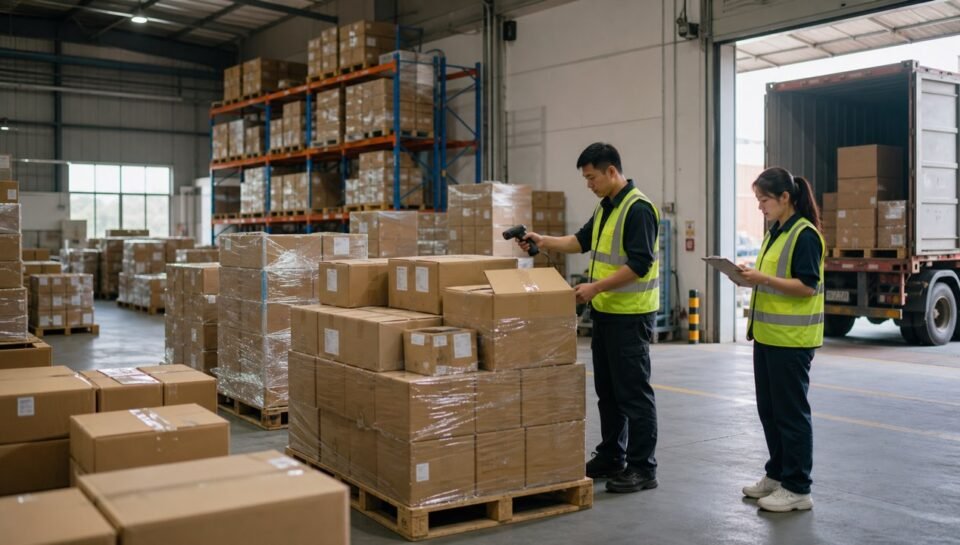
Three suppliers rarely finish on the same afternoon. One has 36 cartons ready, another is waiting for printed boxes, and the third wants the balance before releasing anything. If every factory ships separately, the importer pays for repeated pickups, receives several sets of documents and loses a clear view of what is actually moving. A warehouse in China can bring those loose ends into one controlled handoff.
That does not mean every purchase needs local storage. Warehouse fees can become an unnecessary extra layer on a simple order. The decision depends on supplier count, production timing, inspection needs, packaging work and the way freight is booked. This guide explains when local warehouse and logistics support earns its cost, what the operator should control, and which responsibilities must stay with the importer, broker or forwarder.
When a China warehouse solves a real problem
A warehouse is most useful when cargo needs a controlled stop between the factory and the international carrier. That stop creates time and space to confirm quantities, separate problem goods and prepare one final shipment. It also gives the buyer an independent record after each supplier claims that its order is complete.
- Several suppliers must be combined into one sea, air or rail shipment
- Factories finish on different dates and cannot hold cargo safely
- Cartons need receiving checks before the supplier receives final payment
- Retail labels, inserts, bundles or export cartons must be changed after production
- A forwarder booking moves and the goods need short-term, traceable storage
- Samples, spare parts or replacement units must be collected and sent with the main order
The same setup is useful for an importer buying low volumes from several factories. Each order may be too small for efficient direct shipping, while the combined volume supports a better freight option. The saving needs to be calculated after local delivery, handling, storage, repacking and documentation charges. Consolidation is not automatically cheaper.
When direct factory-to-forwarder delivery is simpler
A single factory order with stable packaging, an approved inspection result and a confirmed booking can usually move straight to the freight forwarder. Adding a warehouse means one more domestic transfer, another handling event and another party that must protect the cargo. For a full container loaded and sealed at the factory, direct loading may also reduce damage and mixing risk.
Ask one practical question: what decision or task will happen at the warehouse? If the answer is only ‘keep the cartons for a few days,’ compare the factory’s holding capacity and the forwarder’s receiving window first. If the answer includes independent counting, consolidation, relabeling, sorting or release control, the warehouse has a defined job.
Warehouse, sourcing company and freight forwarder are different roles
Importers often use these terms as if they describe one provider. They do not. A warehouse receives and stores physical goods. A sourcing company follows suppliers, specifications, quality and commercial issues. A freight forwarder arranges transport and coordinates carrier documents. One business may provide all three services, but its contract should still separate the roles.
This separation matters when something goes wrong. A warehouse can report that six cartons arrived crushed, but it may not have authority to reject the supplier’s lot. A forwarder can book a vessel, but it does not normally decide whether product defects are acceptable. The importer or its appointed sourcing representative should define who can hold cargo, request corrective work and approve release.
Write an operating brief before the first carton arrives
Send the warehouse a shipment brief that connects every supplier delivery to a purchase order and SKU list. Include expected carton counts, carton marks, packing-list versions, target arrival dates and the final shipping plan. If cartons will arrive without clear marks, agree on temporary labels before dispatch. Anonymous brown boxes are easy to mix once several orders share the floor.
The brief should state inspection depth. ‘Check the goods’ can mean anything from looking for wet cartons to opening every case. Define whether staff will count cartons, weigh them, measure dimensions, scan barcodes, open a sample, count units, compare labels or photograph the product. Give tolerances and an escalation contact for discrepancies.
- Issue a warehouse reference for each supplier purchase order.
- Send expected SKU and carton data before the domestic pickup.
- Require a receiving report within an agreed number of working hours.
- Place disputed cargo in a clearly identified hold area.
- Release goods only against a named person’s written approval.
Build a receiving check that catches expensive mistakes
Receiving is the first control point. Staff should compare the physical delivery with the supplier’s packing list and the warehouse notice. The report should record arrival time, vehicle or waybill reference, carton count and obvious damage. Photos need to show the full delivery, pallet condition, carton marks and any discrepancy close enough to understand.
Do not treat a carton count as a unit count. Twenty sealed cartons can still contain the wrong quantity or SKU. Use risk to decide what gets opened. New suppliers, mixed cartons, expensive items and orders with recent production problems deserve deeper checks. A stable repeat order may only need carton-level verification plus random opening.
Record measured gross weight and dimensions when freight cost depends on them. Supplier estimates often survive unchanged through several documents, then the forwarder charges against the actual cargo. Early measurements help the importer compare routing options and correct the commercial packing list before customs filing.
Keep inventory status visible and lots separated
A spreadsheet can manage a small consolidation if it has disciplined inputs. Each receipt needs a location, supplier, PO, SKU, lot or production reference, carton quantity, unit quantity where verified, status and photo link. Status names should be unambiguous: awaiting check, accepted, on hold, rework, ready to ship and dispatched are enough for many importers.
Physical separation must match the record. Held cargo should not sit inside an accepted pallet. Replacement goods should keep their own receipt trail until re-inspection closes the issue. If the product has serial numbers, batch codes, expiry dates or color variants, decide whether the warehouse records them at carton level or unit level. That work can take substantial time, so price it before arrival.
Plan consolidation around readiness, not supplier promises
Set a cargo-ready deadline several days before the carrier cutoff. The buffer must cover domestic transit, receiving, discrepancy resolution, final packing and delivery to the forwarder’s depot or port. A factory saying ‘finished Friday’ may mean production ends Friday night, while cartons and export documents are still incomplete.
Use a consolidation table with one row per supplier. Track production status, inspection result, balance-payment condition, pickup booking, warehouse receipt and release status. If one small order threatens the entire shipment, compare three choices: wait, send that order later, or switch it to air freight. The right answer depends on inventory urgency and the cost of holding every other carton.
When the full load is ready, approve a final packing plan. It should show which cartons enter the shipment, pallet or loose-loading method, final measurements, marks and any placement rule for fragile or heavy cargo. Ask for loading photos and the seal number when a container is sealed at the warehouse.
Control relabeling, kitting and other warehouse work
Local warehouses can replace barcodes, add country labels, insert manuals, build multipacks and repack damaged cartons. These tasks look simple until several languages, model numbers or retailer formats are involved. Approve one finished sample before the team processes the full quantity. The instruction should include the exact label file, position, orientation, surface preparation and acceptance photo.
Set rules for unused labels and removed packaging. Obsolete barcodes left on the worktable can return to the wrong carton. Require a start count, used count, scrap count and remaining count for controlled labels. After work is complete, inspect a defined sample and confirm that the packaging still protects the product during transport.
Technical repair deserves more control than simple repacking. Name the tools, parts, operator qualification and test that proves the repair worked. A warehouse should not improvise electrical, structural or safety-related changes because a supplier sent vague instructions over a messaging app.
Define freight, customs and document ownership
The warehouse needs the delivery address and cutoff, but the importer must know who books freight, prepares export documents, files customs entries and acts as importer of record. Put the chosen Incoterms rule and named place in the sales contract. The ICC’s Incoterms 2020 guidance explains how the rules allocate cost, risk and obligations; the three-letter term alone does not replace a logistics plan.
Product descriptions, tariff classifications, values, quantities and origin information should agree across the commercial invoice, packing list and broker instructions. For U.S. shipments, U.S. Customs and Border Protection reminds importers that compliance is a shared responsibility and that commodity-specific requirements may apply. In the EU, goods from outside the customs territory must be cleared before free circulation, as summarized by the European Commission’s importation guidance. Confirm product and destination requirements with a qualified broker before shipping.
If the order contains batteries, chemicals, magnets, liquids, wood packaging or other controlled cargo, tell the forwarder before booking. Do not assume a supplier’s old declaration is suitable for the current model or route. The warehouse can collect documents, but the responsible carrier, broker and importer need to accept them.
Understand the full warehouse cost
Request a rate sheet with receiving, unloading, per-carton handling, pallet work, storage, pick-and-pack, labels, photos, inspection labor, materials, domestic delivery and minimum charges. Ask when storage starts, whether the rate uses cubic meters, pallets or floor positions, and how partial weeks or months are billed.
Damage liability and insurance also need written limits. Find out how the warehouse records pre-existing damage, what happens after water, fire or handling loss, and which evidence supports a claim. Low storage rates have little value if the operator accepts no meaningful responsibility and keeps weak inventory records.
Red flags when choosing local warehouse support
- No warehouse visit, live video walkthrough or verifiable address is available
- Receipts are acknowledged in chat without signed counts or photos
- Different customers’ cargo is stored together without location records
- Staff promise customs, inspection and repair work without defining scope
- Rates omit minimum fees, materials, overtime or outbound handling
- The operator will release cargo on a verbal request from any supplier
Start with one controlled shipment. Send the operator an expected-receipt file, then compare its report with the physical delivery and supplier packing list. Test how quickly staff isolate a mismatch and whether the inventory view remains accurate after relabeling or partial release. That small trial reveals more than a polished warehouse presentation.
How Direct Sourcing China can coordinate the handoff
Direct Sourcing China can coordinate supplier pickup, warehouse receiving, consolidation, packaging changes, pre-shipment checks and the final handoff to an importer’s nominated forwarder. The useful part is continuity: the same order references, approved specifications and discrepancy decisions follow the goods from factory completion to release.
For a practical review, send the supplier list, purchase orders, expected carton data, destination, preferred shipping window and any label or kitting instructions. Direct Sourcing China can map the required controls across sourcing, quality inspection, compliance, warehouse and logistics support, then identify which jobs belong at the factory, warehouse and forwarder.
FAQ
Usually not if one reliable factory can inspect, pack and hand the order directly to your forwarder. A local warehouse becomes useful when timing is uncertain, you need independent receiving checks, or the goods require relabeling, kitting or short-term storage before export.
Each supplier sends cartons to one agreed warehouse. The warehouse records receipt, checks carton counts and condition, keeps each lot identified, then combines approved cargo into the final shipment according to a written loading and packing plan.
It should show the supplier, purchase order, SKU, carton count, arrival time, carton condition, measured weight or dimensions where required, label status, photos, discrepancies and the storage location assigned to the goods.
A warehouse can handle controlled jobs such as sorting, relabeling, repacking or replacing approved accessories. Product repairs and technical rework need written instructions, a trained operator, an approved sample and a second inspection before the goods are released.
That depends on the sales contract, Incoterms rule and service agreement. Name the importer of record, customs broker, freight forwarder and document owner before cargo moves. The warehouse should not be assumed to carry legal or customs responsibilities that are absent from its contract.






1 Comment
Custom Logo Electronics from China: Wireless Chargers, Power Banks and Speakers - Professional in Auido Products | Best China Sourcing Agent of Best
September 22, 2026[…] can receive each line, check quantities and assemble kits after product-level approval. Our warehouse and logistics guide explains when that extra control is worth […]