

OEM vs ODM Manufacturing in China: Which Is Better for Your Product?

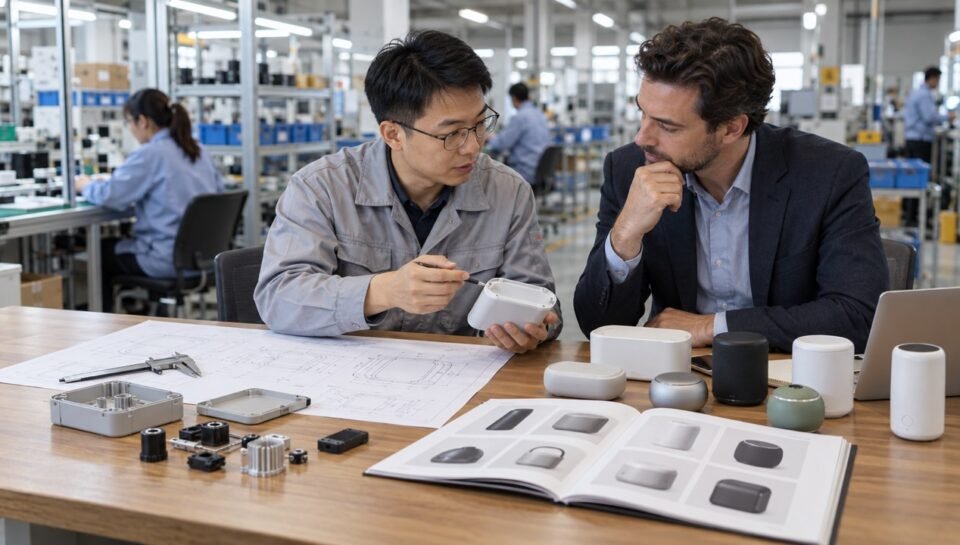
An importer may ask for an OEM quotation while expecting the factory to supply an existing product with a new logo. The factory may call the same project ODM. That vocabulary gap affects the quote, sample plan, tooling, intellectual property, quality control and responsibility for design problems. The useful question is not which label sounds better. It is how much of the product is already defined, who owns each design input and what must be proven before production.
In a practical China sourcing project, OEM usually means the buyer brings a design or detailed specification and the supplier manufactures to it. ODM usually starts from a supplier-controlled design or product platform that the buyer selects and modifies. Suppliers do not use these terms consistently, so the purchase documents should describe the actual work instead of relying on the acronym.
OEM and ODM in one comparison
| Decision point | OEM route | ODM route |
|---|---|---|
| Starting point | Buyer drawing, specification or controlled design | Supplier product platform or existing design |
| Engineering control | Buyer approves design requirements and changes | Supplier controls more of the underlying design |
| Development effort | Often higher when the product is substantially new | Often lower when changes stay within the existing platform |
| Tooling | May require dedicated molds, fixtures or test equipment | May use shared tooling, with custom tooling for selected parts |
| Speed to sample | Depends on design readiness and engineering work | Can be faster when a working base model already exists |
| Differentiation | Can support a distinctive product and controlled specification | Usually limited by the platform and available changes |
| Main risk | Incomplete design inputs, engineering changes and tooling cost | Unclear ownership, hidden platform changes and product similarity |
Neither route is automatically safer or cheaper. A disciplined ODM project can be a good way to test a market with limited development work. A weak OEM brief can create repeated samples and an unstable production process. The decision should follow the product, volume, budget, launch date and level of control the importer needs.
What an OEM project requires from the buyer
OEM works when the buyer can give the factory controlled inputs. A concept image and target price are not enough for a factory to manufacture a repeatable product. The supplier needs dimensions, tolerances, materials, finish, functions, performance limits, labeling, packaging and acceptance criteria. If engineering is incomplete, the parties should state which supplier tasks are design services and which are manufacturing preparation.
- A revision-controlled drawing set, specification or product requirement document
- A bill of materials or a clear process for selecting and approving critical components
- Measurable performance, durability, appearance and packaging requirements
- Destination-market requirements and a plan for testing, labels and technical files
- Forecast volume, first-order quantity and expected production schedule
- Ownership and handover terms for drawings, CAD files, firmware, molds, fixtures and test programs
The buyer does not need to finish every engineering detail alone. A capable supplier can propose materials, manufacturing processes and design-for-manufacture changes. Each proposal should be documented and approved. Otherwise, a supplier suggestion can quietly become the production standard without the buyer understanding its effect on cost, performance or compliance.
For a broader stage-by-stage workflow, read our guide to product development in China. It covers briefs, prototypes, tooling samples, pilot production and the release to mass production.
What to verify in an ODM product platform
ODM can shorten the path to a sample because the supplier begins with an existing platform. The platform may include the housing, mechanical structure, electronics, firmware, material system and production process. The importer still needs to verify what is established and what changes when branding, packaging, features or components are customized.
Ask for a platform change matrix
| Element | Keep from base model | Proposed change | Approval evidence |
|---|---|---|---|
| Housing and dimensions | Existing mold and fit | Color, texture or custom part | Drawing and signed sample |
| Components | Approved standard BOM | Alternative material or electronic part | Part number, sample and test result |
| Firmware or function | Existing release | Language, interface or feature change | Version record and functional test |
| Branding | Unbranded surface | Logo, label and serial format | Artwork approval and production sample |
| Packaging | Standard protective pack | Retail box, insert and carton | Dieline, drop test and packing sample |
| Compliance file | Evidence for base configuration | Review after every relevant change | Exact-model document matrix |
Ask whether the base product is already in stable production, which parts are common across customers and whether the factory may change those parts. An approved sample can lose value if the supplier treats the internal platform as its own variable design. The purchase order should define critical components and require written approval before a substitution.
Choose OEM when control and differentiation justify the work
OEM is often appropriate when the product depends on a buyer-owned design, a specific mechanical interface, unusual performance, proprietary software or a distinctive user experience. It also fits established brands that can support engineering reviews and expect repeat orders large enough to recover development and tooling cost.
- The product must meet buyer-defined dimensions, materials, tolerances or performance targets.
- The importer needs a controlled design that can be quoted by more than one qualified manufacturer.
- Custom tooling or test equipment is commercially justified by forecast volume.
- Product differentiation matters more than the fastest possible launch.
- The buyer can manage specification decisions, sample approvals and change control.
OEM becomes risky when the design is presented as complete but still contains unanswered manufacturing questions. Factories may fill those gaps differently, so apparently comparable quotations can cover different materials, components and quality levels. A sourcing team should normalize the quotations and issue a common clarification list before the buyer selects a supplier.
Choose ODM when a proven platform meets the commercial need
ODM is often practical for a first launch, a standard category or a product where modest changes create enough market distinction. The buyer can focus development effort on the specification choices customers will notice, such as material grade, finish, feature set, packaging and accessories. This can reduce tooling and engineering work, provided the underlying platform is stable and the supplier is transparent about it.
- The target product already exists close to the required function and quality level.
- The buyer accepts platform limits and does not need exclusive internal architecture.
- Launch timing or test volume makes a ground-up design uneconomic.
- The supplier can identify the base model, its production history and controlled components.
- Branding and selected changes can be validated without turning the project into an undeclared OEM redesign.
A catalog photo is not evidence of a mature ODM platform. Request production samples, internal photographs where appropriate, a current BOM summary, available test records and proof of the operating manufacturer. Some suppliers display products made by another factory or show designs that have never entered repeat production.
Compare total cost, not the first unit price
The unit quotation covers only part of the decision. OEM may add design work, prototypes, molds, fixtures, certification, pilot production and more sample rounds. ODM may add customization charges, packaging setup, software changes, minimum quantities or a higher unit price for the supplier’s platform. Freight, inspection and rework apply to either route.
| Cost line | Questions for the supplier |
|---|---|
| Engineering | Which design reviews, drawings and revisions are included? |
| Samples | How many rounds and units are included, and who pays courier cost? |
| Tooling | Who owns each mold or fixture, where is it stored and what maintenance is included? |
| Testing | Which laboratory or factory tests are required for the exact production configuration? |
| MOQ | Is the minimum driven by production setup, raw material, packaging or a component supplier? |
| Changes | How will an approved change affect price, lead time, testing and old inventory? |
| Quality control | What inspection, reliability tests and reinspection terms are included or separate? |
Build the comparison across the expected first-year volume. A low-volume launch may favor an existing ODM platform even when its unit price is higher. A product with stable repeat demand may justify OEM tooling and engineering because the buyer gains tighter control and can evaluate alternative factories against the same specification.
Protect design rights, tooling and commercial information
OEM and ODM describe a supply arrangement, not an ownership rule. The contract should identify who brought each design, who created new work, what the buyer paid for and which files or assets must be delivered. For important intellectual-property questions, use legal advice that covers China and the sales markets. The sourcing documents still need practical controls that factory teams can follow.
- List buyer-supplied drawings, code, artwork, trademarks and confidential information.
- List supplier background technology and the base ODM design that remains supplier-owned.
- Define ownership or licensed use of project-specific drawings, molds, fixtures, firmware and packaging files.
- Mark paid tooling with an asset number and record its factory location, condition and permitted use.
- State whether the supplier may sell the same or a similar configuration to other customers.
- Set a handover process for production records and buyer-owned assets if the relationship ends.
Exclusivity needs a precise scope. It might cover a model, appearance, territory, customer channel or time period. A broad promise such as ‘exclusive product’ is difficult to apply when the supplier uses a common ODM platform. Record the protected elements and the commercial commitment that supports exclusivity.
Verify the actual manufacturer and engineering capability
The best OEM or ODM route still fails if the selected supplier lacks the relevant process, engineering capacity or quality system. Confirm the legal company, operating address, production role, main equipment, subcontracted operations and bank beneficiary. Then evaluate capability against the specific product rather than a generic factory presentation.
- Send the same requirement and quotation format to each qualified candidate.
- Ask who owns the design and who manufactures the key parts shown in the quotation.
- Review a comparable product on the production floor and trace it through inspection records.
- Meet the engineer responsible for the sample, not only the salesperson handling the account.
- Check whether critical processes and tests are performed in-house or by named subcontractors.
- Confirm that the quotation, sample, company registration and payment account refer to the same commercial chain.
Our guide to verifying a Chinese supplier before paying a deposit explains the legal entity, bank-account and factory checks. If the commercial chain is unclear, also compare the signs in our factory versus trading company guide.
Use samples as controlled approval stages
A sample should answer a defined question. An appearance sample can confirm shape and finish but may not use production materials. An engineering prototype can prove function but may not represent molded parts. A tooling sample tests the actual mold and process. A pilot run checks whether the factory can repeat the approved result with production workers, equipment and inspection methods.
| Sample stage | Decision before moving forward |
|---|---|
| Reference or catalog sample | Is the base product suitable enough to justify supplier work? |
| Customized sample | Do selected ODM changes or early OEM features meet the brief? |
| Engineering prototype | Are function, interfaces and key risks acceptable for tooling? |
| Tooling sample | Do production materials, dimensions and appearance meet the approved specification? |
| Pilot run | Can the factory repeat the product and inspection process at a controlled quantity? |
| Golden sample | Is this the signed reference for mass production and final inspection? |
Give every approved sample a revision, date and signed issue list. Photograph critical details and record materials, part numbers, firmware and packaging. Keep one reference with the buyer or local sourcing team and another controlled sample at the factory. Verbal approval through a chat message is difficult to use when production later differs.
Build quality control before the purchase order
Quality control should reflect the chosen route. OEM inspection must verify the buyer’s controlled specification and approved engineering changes. ODM inspection must also confirm that the supplier did not substitute a different version of the base platform. In both cases, quality criteria should be agreed before the deposit, when the buyer still has leverage to correct an incomplete plan.
- Define critical, major and minor defects with product-specific examples.
- Set measurable checks for dimensions, materials, function, performance and packaging.
- Identify critical components and approved suppliers or part numbers where needed.
- Agree production checkpoints, sample size, acceptance limits and report format.
- Require written approval for changes to materials, components, tooling, firmware or subcontractors.
- Link balance payment and shipment release to passed inspection and resolved corrective actions.
A final inspection is one control point, not a substitute for development records. Use our pre-shipment inspection guide to prepare the checklist, sampling plan and balance-payment decision.
A practical decision process for importers
- Write the target market, use case, must-have requirements, quantity, budget and launch date.
- Separate proprietary features from areas where an existing supplier platform is acceptable.
- Request both a build-to-spec OEM route and a platform-based ODM route when both are realistic.
- Normalize quotations to include engineering, samples, tooling, testing, packaging, MOQ and quality control.
- Verify the factory and review evidence for the proposed platform or comparable manufacturing process.
- Document ownership, permitted use, change control and tooling before paying development fees or a deposit.
- Approve samples by stage and release mass production only after the specification and quality plan are complete.
A hybrid route is common. The buyer may use a proven internal platform while funding a custom housing, firmware change or accessory system. Treat the hybrid as a component-by-component decision. State which elements are buyer-controlled, which remain supplier-controlled and which tests must be repeated after customization.
How Direct Sourcing China supports OEM and ODM projects
Direct Sourcing China can turn the buyer brief into a comparable supplier search, verify the operating factory, coordinate technical questions, track samples and revisions, and prepare production and inspection checkpoints. Our sourcing and purchasing service connects supplier selection with the quality-engineering work required after a quotation is received.
If you are deciding between OEM and ODM, send the product reference, target market, expected quantity, required customization and launch date. We can help identify which inputs are ready, which supplier claims need evidence and which costs should be compared before you commit to tooling or production.
Frequently asked questions
OEM usually means a supplier manufactures from a buyer-controlled design or detailed specification. ODM usually starts from a supplier-controlled product design or platform. Because suppliers use the terms differently, the agreement should define the actual design, manufacturing and ownership responsibilities.
No. ODM can reduce engineering and tooling work when an existing platform fits the requirement, but customization, MOQ and unit price still matter. Compare first-year total cost, including samples, tooling, testing, packaging, inspection and likely changes.
Usually, but available changes depend on the platform and supplier. Approve logo position, artwork, color, packaging, components and any firmware changes through controlled samples, then confirm whether the changes affect testing, MOQ or lead time.
Payment for a mold does not by itself define every ownership and use right. The contract and purchase documents should identify the owner, permitted products and customers, factory location, maintenance, storage, access and transfer process.
A startup with limited volume and a short validation schedule may benefit from a suitable ODM platform. OEM can make sense when a proprietary design or measurable performance difference is central to the business. The choice depends on product readiness, budget, control and expected repeat volume.